

Pistol-Grip Three-Point Bore Gauge 6-300mm – Carbide Tips, Calibration Rings & Ambidextrous Design
Description
I. In-Depth Product Analysis
Measuring internal diameters accurately, especially in deep bores or mass-production environments, often requires a tool that is both precise and comfortable to use repeatedly. Our H-305 Series Pistol-Grip Three-Point Bore Gauge is specifically designed to meet this need. It combines the proven accuracy of a three-point self-centering measurement system with a highly ergonomic pistol-grip handle and trigger mechanism.
This unique design allows operators to perform measurements with a single hand. By simply squeezing the trigger, the measuring contacts retract, allowing the gauge to be inserted easily into a bore. Releasing the trigger engages the self-centering three-point contacts against the internal wall, providing a perfectly aligned, repeatable reading on the attached dial indicator. This drastically reduces the manual adjustments required by traditional bore gauges and eliminates operator-induced angle errors.
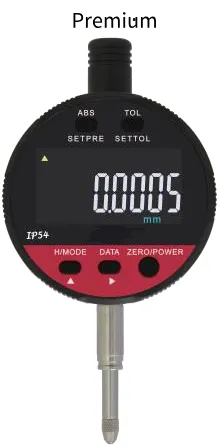
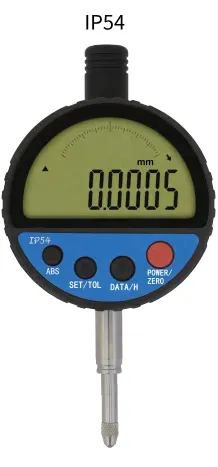
For exceptional long-term durability, models exceeding 12mm in diameter feature hardened carbide measuring surfaces . These ultra-hard tips resist abrasive wear from continuous contact with cast iron, hardened steel, and rough-machined surfaces, preserving the 0.004mm to 0.007mm accuracy over years of service. Each gauge set includes a matching precision calibration ring for models up to 100mm (optional for larger diameters), allowing you to instantly set a traceable zero baseline. The gauge is also highly adaptable, featuring standard Φ8mm or Φ9.525mm mounting sizes compatible with most industry-standard mechanical or digital dial indicators.
II. Technical Specifications
The H-305 series is available in comprehensive individual units and complete measuring sets.
Individual Units Specifications:

| Model Number | Measuring Range | Accuracy | Setting Ring | L | A | Extension Rod |
|---|---|---|---|---|---|---|
| H-305-01-000 | 6-8mm | 0.004mm | Φ6mm | 54.5mm | 1.5mm | 100mm |
| H-305-02-000 | 8-10mm | 0.004mm | Φ8mm | 54.5mm | 1.5mm | 100mm |
| H-305-03-000 | 10-12mm | 0.004mm | Φ10mm | 54.5mm | 1.5mm | 100mm |
| H-305-04-000 | 12-16mm | 0.004mm | Φ16mm | 80mm | 0.5mm | 150mm |
| H-305-05-000 | 16-20mm | 0.004mm | Φ16mm | 80mm | 0.5mm | 150mm |
| H-305-06-000 | 20-25mm | 0.004mm | Φ25mm | 90mm | 0.5mm | 150mm |
| H-305-07-000 | 25-30mm | 0.004mm | Φ25mm | 90mm | 0.5mm | 150mm |
| H-305-08-000 | 30-40mm | 0.004mm | Φ40mm | 97mm | 0.5mm | 150mm |
| H-305-09-000 | 40-50mm | 0.005mm | Φ40mm | 97mm | 0.5mm | 150mm |
| H-305-10-230 | 50-63mm | 0.005mm | Φ62mm | 112mm | 0.5mm | 150mm |
| H-305-11-230 | 62-75mm | 0.005mm | Φ62mm | 112mm | 0.5mm | 150mm |
| H-305-12-230 | 75-88mm | 0.005mm | Φ87mm | 112mm | 0.5mm | 150mm |
| H-305-13-230 | 87-100mm | 0.005mm | Φ87mm | 112mm | 0.5mm | 150mm |
| H-305-61-000 | 100-125mm | 0.005mm | Φ112.5mm | 130mm | 0.5mm | 150mm |
| H-305-62-000 | 125-150mm | 0.005mm | Φ137.5mm | 130mm | 0.5mm | 150mm |
| H-305-63-000 | 150-175mm | 0.005mm | Φ162.5mm | 130mm | 0.5mm | 150mm |
| H-305-64-000 | 175-200mm | 0.005mm | Φ187.5mm | 130mm | 0.5mm | 150mm |
| H-305-65-000 | 200-225mm | 0.007mm | Φ212.5mm | 130mm | 0.5mm | 150mm |
| H-305-66-000 | 225-250mm | 0.007mm | Φ237.5mm | 130mm | 0.5mm | 150mm |
| H-305-67-000 | 250-275mm | 0.007mm | Φ262.5mm | 130mm | 0.5mm | 150mm |
| H-305-68-000 | 275-300mm | 0.007mm | Φ287.5mm | 130mm | 0.5mm | 150mm |
Complete Sets Specifications:

| Model Number | Measurement Range | Set Range | Calibration Rings | Extension Rod | A Dimension |
|---|---|---|---|---|---|
| H-305-44-000 | 6-12mm | 6-12mm | Φ6, 8, 10mm | 100mm | 1.5mm |
| H-305-46-000 | 12-20mm | 12-20mm | Φ16mm | 150mm | 0.5mm |
| H-305-48-000 | 20-50mm | 20-50mm | Φ25, 40mm | 150mm | 0.5mm |
| H-305-50-230 | 50-100mm | 50-100mm | Φ62, 87mm | 150mm | 0.5mm |
III. FAQ (Frequently Asked Questions)
Q1: What is the primary advantage of the pistol-grip design over a standard bore gauge?
A:
The pistol-grip design allows for true one-handed operation. The operator squeezes the trigger to retract the contacts, inserts the gauge into the bore, and releases the trigger to take a measurement. This dramatically speeds up the measurement cycle, reduces operator fatigue during high-volume inspections, and allows the user to maintain a stable grip on the workpiece with their free hand.
Q2: Why are carbide measuring surfaces only available on models above 12mm?
A:
The extreme compactness of the 6-12mm measuring heads leaves very little physical space for three individual mechanical wedges. To maintain the miniature form factor required for these tiny bores, these specific heads are manufactured from specially hardened, ultra-high-grade steel instead of carbide. For all models 12mm and above, hardened carbide measuring faces are standard.
Q3: What calibration rings are included, and what about the larger sizes?
A:
A precision calibration ring is included for every gauge up to 100mm. For sets and individual units exceeding 100mm (such as the H-305-61-000 range up to 300mm), calibration rings are available as optional accessories. Because of the massive size of these rings, they are typically ordered separately to ensure cost-effectiveness for users who do not require daily zeroing at those extreme diameters.
Q4: Which dial indicators are compatible with this bore gauge?
A:
The gauge head is equipped with a universal mounting mechanism designed to accept standard industrial dial indicators. It supports both
Φ8mm
and
Φ9.525mm
(3/8″) mounting stems. You can easily install your preferred mechanical dial indicator or a digital indicator with a digital output for SPC data logging.
Q5: Is this gauge suitable for measuring blind holes?
A:
Yes. The three-point contact design is specifically engineered for both blind and through holes. The measuring contacts are positioned close to the bottom edge of the head, allowing you to accurately measure the internal diameter almost down to the bottom of a blind hole where the flat surface ends, without interference.
IV. Applications & Industry Uses
-
Automotive Engine & Transmission Manufacturing: Fast, precise measurement of engine cylinder bores, connecting rod ends, and transmission housing internal diameters.
-
Aerospace Component Inspection: Reliable verification of hydraulic valve bodies, structural bores, and precision-machined fitting ID's.
-
Hydraulic Cylinder Manufacturing: Measuring the internal diameters of deep hydraulic actuator cylinders and pneumatic pressure vessels.
-
Precision Machining & CNC Turning: Rapid in-process and final inspection of bored and honed parts on the production floor.
-
Quality Control & Inspection Departments: A core instrument for dimensional compliance checks and batch sampling in QC labs.
-
Industrial Maintenance & Repair: Assessing internal wear on large pump housings, compressor cylinders, and heavy machinery components.
V. Accuracy & Working Principle (Accuracy & Mechanics)
The H-305 series achieves its 0.004mm to 0.007mm accuracy through a precise mechanical three-point wedge system. When the operator releases the ergonomic trigger, a spring-loaded internal mechanism pushes three symmetrically placed wedges forward simultaneously. These wedges force the measuring contact points to expand outwards at identical rates until they firmly touch the inner wall of the bore. Because the wedges are precision-ground to exact angles, the three contact points automatically self-center the gauge, eliminating off-axis tilting errors. This linear mechanical displacement is transferred up through the shaft to the dial indicator, where it is displayed as a precise dimensional reading. The spring-loaded trigger ensures that the measuring force remains perfectly consistent, guaranteeing excellent repeatability.
VI. Calibration & Maintenance
-
Daily Zero Verification: Before a measurement session, clean the contacts and insert the gauge into the included calibration ring (or optional setting ring for larger ranges). Squeeze and release the trigger to take a reading, and use the
SETfunction or zero ring on your dial indicator to establish the absolute zero baseline. -
Clean the Contact Points: The small carbide or hardened steel contact points are highly sensitive to debris. After use, gently wipe them with a soft, lint-free cloth. Do not use compressed air, as it can blow dust into the internal wedge mechanism.
-
Maintain the Trigger Mechanism: The trigger is spring-loaded. Keep the trigger area free of grinding swarf and oil buildup. Periodically apply a light drop of instrument-grade oil to the trigger pivot point if it begins to feel stiff.
-
Annual Professional Calibration: For strict ISO 9001 or AS9100 compliance, the complete set (including the indicator) should undergo formal traceable calibration by an accredited metrology lab every 12 months .
Applications
CNC Machining
Ideal for CNC lathe, milling and machining center operations, ensuring high-precision dimensional control and reliable tool holding for mass production.
Quality Control Labs
Suitable for quality inspection departments and calibration labs, providing accurate measurement data to verify product compliance with ISO and industry standards.
Mold & Die Making
Perfect for mold and die workshops, where micron-level precision tools and gauges are essential for complex cavity machining and final inspection.
OEM/ODM Projects
Customizable solutions for OEM and ODM manufacturing partners, offering tailored measuring tools and CNC accessories to meet unique production requirements.
Automotive Manufacturing
Designed for automotive component production lines, ensuring consistent precision and durability in engine parts, transmission components and assembly processes.
Aerospace & Precision Engineering
Ideal for aerospace and defense manufacturing, where ultra-high precision instruments and reliable tool holders meet strict quality and safety requirements.
Hot Products
-

Digital Adjustable Anvil Micrometer 300-1000mm – IP65, Carbide Faces & 0.001mm Resolution
-

U-Shaped Outside Micrometer 0-200mm – 0.01mm Precision with Carbide Measuring Faces
-

High Precision Three-Point Internal Micrometer – Self-Centering Carbide Bore Gage with 0.001mm Resolution
-

Three-Point Internal Micrometer 50-300mm – Self-Centering Bore Gauge with Carbide Tips & Aluminum Body
-

Self-Centering Three-Point Internal Micrometer 6-50mm – Carbide Tips, Ratchet Thimble & Calibration Ring
-

Precision Three-Point Internal Micrometer 2-6mm – Two-Point Expanding Probe for Small Bores